

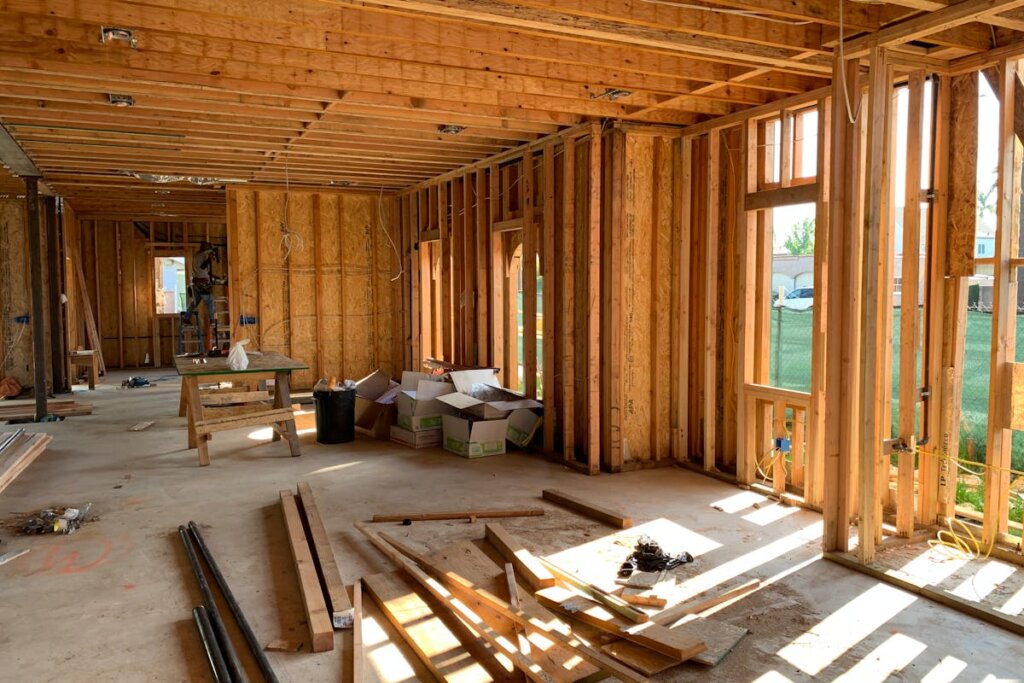
Owning an unfinished house in CT puts you at a crossroads that many Connecticut homeowners find themselves standing at longer than they expected. The idea of completing the project sounds appealing in theory. A finished home commands a higher price, attracts more buyers, and represents the vision you or the previous owner had when construction first began.
But the reality of what it actually costs to get there, in both time and money, often tells a very different story than the one you imagined when you first considered pushing the project forward.
What Counts as an Unfinished Home in Connecticut
Before weighing your options, it helps to understand what the market considers unfinished and how that affects your position as a seller. An unfinished house in CT can mean several different things. It might be a new construction project that stalled partway through, leaving rooms without drywall, flooring, or fixtures.
It could be an older home where a renovation was started and abandoned, leaving parts of the structure exposed or incomplete. It might also be a property where the bones are solid, but key systems like plumbing, electrical, or HVAC were never fully installed or updated.
Each of these scenarios carries its own set of complications and costs. The further along the project is, the more you have already invested, which makes selling as-is feel even more difficult psychologically. But sunk costs should not drive your decision. What matters is what completing the project will actually cost you from this point forward, compared to what it will return at closing.
The True Cost of Finishing the Project
Connecticut construction costs have risen considerably in recent years. Labor shortages, material price increases, and longer project timelines have all pushed the price of residential construction higher. A homeowner who received a contractor estimate two or three years ago may be in for a significant shock when they request updated quotes today.
For a home that needs substantial work, finishing costs can range from tens of thousands of dollars to well over six figures, depending on the size of the property and what remains to be completed.
Framing, insulation, drywall, flooring, kitchen and bathroom installation, electrical work, plumbing, and HVAC all carry their own costs, and coordinating multiple contractors simultaneously adds another layer of complexity and expense. Understanding how much it costs to build a house in CT gives useful context for what individual components of a project are likely to cost in today’s market.
Beyond the direct construction costs, you also need to factor in the carrying costs of owning the property while work is underway. Property taxes, insurance, utilities, and loan payments do not pause while contractors are on site.
A project that takes six months to complete means six additional months of those expenses stacking up on top of whatever you are spending on labor and materials. For older homes where outdated systems are also a concern, decisions like whether rewiring costs are worth the investment add another financial variable to an already complicated equation.
What You Can Realistically Expect to Recover
The central question for any homeowner considering finishing an unfinished house in CT is whether the value added by completing the project will exceed what the project costs. This is rarely a straightforward calculation, and the answer depends heavily on the location of the property, the quality of the finish, and current market conditions in your specific area.
In general, a finished home in a desirable Connecticut market will sell for more than an unfinished one. But the premium you receive for completing the project is rarely dollar for dollar with what you spent.
Appraisers and buyers factor in the finished product, not the effort it took to get there. If you overspend on finishes relative to what the neighborhood supports, you will not recoup that investment at closing, regardless of how beautiful the work turned out.
In markets where comparable finished homes are selling at prices that comfortably support the cost of completion, finishing can make financial sense. In markets where price ceilings are lower or buyer demand is softer, the math often does not work in the seller’s favor.
Getting clear on how Connecticut home values are actually determined before you commit to a major investment helps you approach that calculation with realistic expectations rather than hopeful projections.
The Case for Selling As Is
Selling an unfinished house in CT as-is is not a last resort. For many homeowners, it is genuinely the smarter financial and practical choice. A direct sale eliminates the risk of cost overruns, contractor delays, permitting complications, and the uncertainty of whether the market will reward your investment by the time the work is complete.
Cash buyers who specialize in unfinished and distressed properties purchase homes at all stages of completion.
They have the experience, contractor relationships, and capital to take on projects that most traditional buyers would walk away from, which means they can close quickly and without any requirement for you to invest another dollar into the property. Why some buyers purchase homes that others will not sheds light on how this kind of buyer evaluates an unfinished property and what makes the transaction work for both parties.
When you sell as-is, you also avoid the carrying costs that accumulate during a construction timeline. Those months of mortgage payments, taxes, and insurance that would have piled up while contractors worked their way through your project stay in your pocket instead.
Combined with the savings on construction costs themselves, the as-is sale price often compares more favorably to the net proceeds of a finished sale than most homeowners initially expect. Understanding the full benefits of accepting a cash offer makes that comparison even clearer.
Making the Decision That Is Right for Your Situation
There is no universal answer to whether finishing or selling as-is is the better choice for every unfinished house in CT. What matters is doing the math honestly for your specific property, your specific market, and your specific timeline.
Get accurate contractor quotes for the remaining work. Research what comparable finished homes in your area are actually selling for. Calculate the carrying costs you will absorb during the construction period. Then compare that total against what a direct sale would net you today.
For many Connecticut homeowners, that honest comparison reveals that selling as-is is closer to finishing than they assumed, and far less stressful than taking on a construction project with no guaranteed outcome at the end of it.